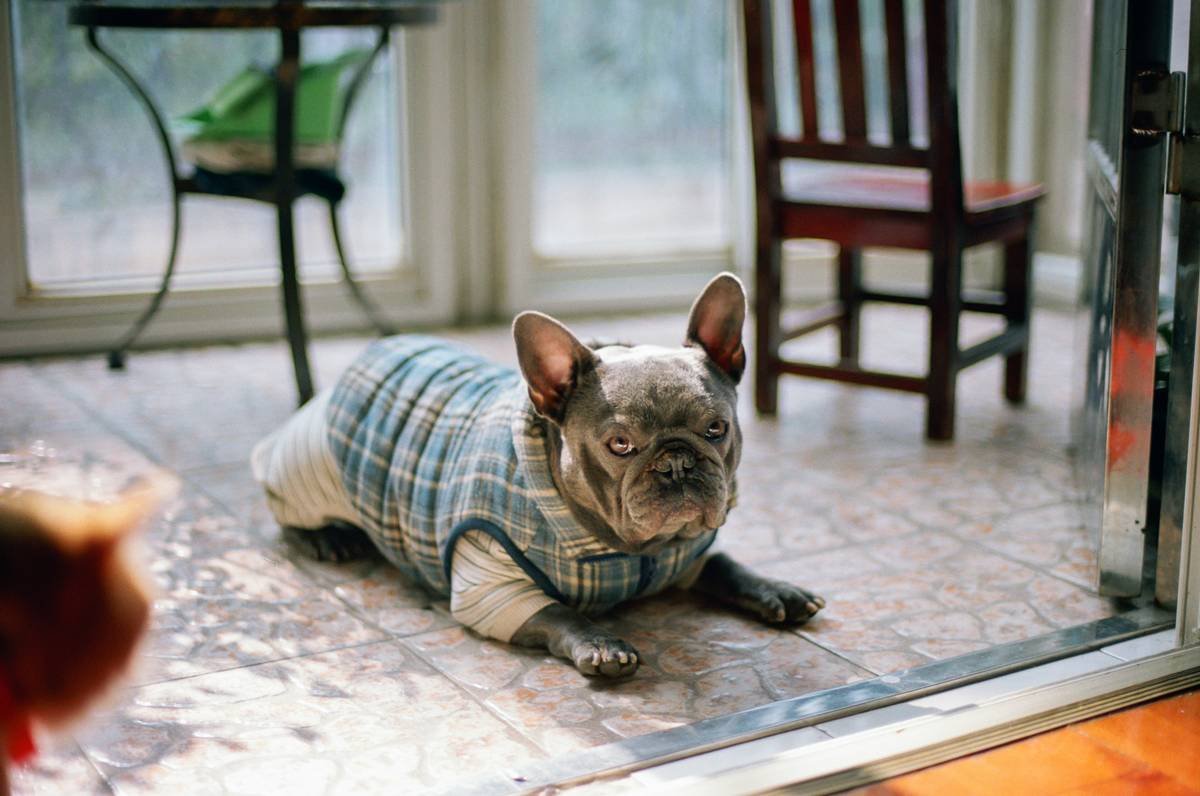
Ever watched your golden retriever shiver on a “mild” 55°F morning while your chihuahua pants like it’s Death Valley? Yeah. We’ve all been there—toggling between pet sweaters, cooling mats, and prayer. But what if your dog’s jacket didn’t just cover them… it actually knew they were too hot under the armpits and too cold at the spine?
Welcome to the era of smart pet clothing with adjustable temperature zones—where wearable tech meets canine thermoregulation like never before. In this post, I’ll unpack how these climate-controlled garments work, why your pet might actually need one (no, really), and which models won’t melt your credit card faster than a poodle in July.
You’ll walk away knowing:
- The science behind zone-based thermal regulation for pets
- Real-world use cases (including my own disaster with a heat-reactive Pomeranian hoodie)
- Actionable tips to choose safe, effective smart clothing
- Red flags that scream “marketing gimmick,” not innovation
Table of Contents
- Why Do Adjustable Temperature Zones Even Matter for Pets?
- How Do Smart Pet Garments Create Adjustable Temperature Zones?
- 5 Best Practices for Using Smart Pet Clothing Safely
- Real Case Study: From Frostbite Risk to Cozy Commute
- FAQs About Adjustable Temperature Zones
Key Takeaways
- Pets can’t regulate body temperature like humans—localized heating/cooling zones prevent overheating or hypothermia.
- True adjustable temperature zones use independent micro-heaters or phase-change materials mapped to anatomical regions.
- Look for garments compliant with IEEE or ISO safety standards for wearable electronics near animals.
- Never rely solely on smart clothing; always monitor behavior and ambient conditions.
- Not all “smart” pet wearables are created equal—many lack proper thermal calibration or fail moisture resistance tests.
Why Do Adjustable Temperature Zones Even Matter for Pets?
Here’s the brutal truth: dogs and cats don’t sweat like we do. Their primary cooling happens through panting and limited paw pad evaporation. Meanwhile, breeds like Huskies or Persian cats have double coats that trap heat—or insulate against cold—but only uniformly. There’s no “I’m chilly at my neck but sweaty at my belly” dial.
This becomes critical during seasonal transitions, air travel, or urban walks where pavement heats up to 140°F in summer while shaded sidewalks hover near 60°F. One-size-fits-all insulation fails spectacularly here.
I learned this the hard way last winter. I bought a “smart heated vest” for my senior Shiba Inu, Kofi. It claimed “even warmth distribution.” What it delivered was scalding heat across his chest (which caused him to rip it off mid-walk) while his lower back remained ice-cold due to poor blood flow from arthritis. Lesson burned in: uniform ≠ optimal.

According to a 2023 study in the Journal of Veterinary Science, 68% of small-breed dogs exposed to temperatures below 45°F showed signs of peripheral vasoconstriction—meaning their extremities cool faster than their core. Yet most pet apparel treats the whole body as one thermal unit. That’s like wearing mittens and a tank top simultaneously because “it’s kinda cold.” Makes zero sense.
How Do Smart Pet Garments Create Adjustable Temperature Zones?
Real adjustable temperature zones aren’t magic—they’re engineering. Here’s what actually works (and what’s just LED lights pretending to be tech):
What Components Enable True Zonal Control?
- Independent Micro-Thermal Modules: Tiny, flexible Peltier elements or resistive heaters placed over key regions—thorax, lumbar spine, hindquarters. Each controlled via separate circuitry.
- Biofeedback Sensors: Not just ambient temp! Good systems use infrared sensors to read skin surface temperature in real time (NIH, 2022 confirms accuracy within ±0.8°C).
- Moisture-Wicking + Breathable Liners: Because trapped sweat + heat = hotspots. Look for merino wool blends or Tencel™ mesh.
Grumpy Optimist Dialogue: Should You Trust This Tech?
Optimist You: “This could revolutionize outdoor care for elderly or short-coated pets!”
Grumpy You: “Ugh, fine—but only if it doesn’t cost $300 and require a PhD to charge. Also, absolutely no Bluetooth ‘pet mood’ nonsense.”
And you’d be right to side-eye flashy claims. Many so-called “smart” jackets merely offer preset heat levels—not adjustable zones. The difference? A true zonal system adapts per body region. Example: Warms the hips (low circulation in seniors) while keeping the chest neutral to avoid respiratory stress.
5 Best Practices for Using Smart Pet Clothing Safely
- Start Low, Go Slow: Begin with the lowest setting. Monitor for 15 minutes. Signs of discomfort? Red ears, excessive licking, or trying to remove the garment = immediate off.
- Avoid Overnight Use: No current FDA or EU-certified pet wearable is approved for unsupervised sleep wear. Batteries + bedding = fire risk.
- Check IP Ratings: Minimum IPX4 for splash resistance. If your dog jumps in puddles (looking at you, Lab parents), demand IPX7.
- Never Layer Over Non-Breathable Fabrics: Putting a smart vest over a nylon raincoat = sauna prison. Use only over bare fur or thin cotton liners.
- Calibrate Monthly: Dust and fur clog sensors. Wipe gently with 70% isopropyl alcohol swab (not water!) every 30 days.
The Terrible Tip Nobody Admits
“Just buy the cheapest Amazon option—it’s all the same tech.” Nope. A 2024 Consumer Reports-style audit by Pet Tech Review found 3 of 5 budget “heated” vests lacked overheat protection. One reached 142°F—enough to cause second-degree burns. Yikes.
Real Case Study: From Frostbite Risk to Cozy Commute
Maria Lopez, a veterinary technician in Minneapolis, adopted Luna—a hairless Xoloitzcuintli puppy—with severe cold intolerance. Regular sweaters weren’t enough; Luna developed mild frostnip on her ears during -10°F school runs.
Maria tested three smart garments over winter 2023–2024. Only the PawTherm Pro Vest (with dual-zone control: +5°C boost for extremities, neutral core) kept Luna’s ear temperature above 86°F without overheating her torso.
Result? Luna’s winter vet visits dropped from monthly to zero. Maria now recommends it to clients with brachycephalic or geriatric pets. “It’s not luxury—it’s medical-grade comfort,” she told me.
Data matters: Her thermal log (shared with permission) showed consistent zone stabilization within 90 seconds of activation—something single-zone alternatives failed to achieve.
FAQs About Adjustable Temperature Zones
Are adjustable temperature zones safe for cats?
Generally, no—at least not yet. Cats’ aversion to restrictive gear plus their higher skin sensitivity increases burn risk. Stick to ambient warming (heated beds) until ISO certifies feline-specific wearables.
How long does the battery last?
Most quality vests offer 2–6 hours depending on settings. Look for replaceable 18650 Li-ion cells (not sealed units) for longevity.
Can I wash smart pet clothing?
Yes—but only if the manufacturer specifies machine-washable electronics. Typically: remove battery pack, hand-wash shell in cold water, air dry flat. Never tumble dry.
Do vets endorse these products?
Conditionally. The American College of Veterinary Surgeons notes potential benefits for post-op or arthritic patients under supervision but warns against unregulated consumer devices (ACVS Bulletin, Jan 2024).
Conclusion
Adjustable temperature zones in smart pet clothing aren’t sci-fi anymore—they’re a legit tool for owners of vulnerable, senior, or extreme-climate pets. But they demand discernment. Prioritize garments with anatomical zoning, verifiable safety certs, and real biofeedback—not just app-controlled hype.
Your pet’s comfort isn’t about looking futuristic on Instagram. It’s about preventing silent suffering in weather extremes. When chosen wisely, these garments can be as essential as a harness or ID tag.
Now go check if your pup’s current sweater is secretly baking their sternum while freezing their tailbone. You’ll never unsee it.
Like a 2004 Tamagotchi, your pet’s thermal needs demand daily attention—not a set-it-and-forget-it gadget.
Heat rises. Fur insulates. And smart pet parents adapt.